Tuesday, October 2, 2012

Eastern European posters


In my research, I've been struck by the aspirational quality of Eastern European posters.  For instance, the Czech New Wave film director Jiri Menzel  used Larks on a String (krivánci na niti) (1969) a movie set in grim postwar Czechoslavakia,  to critique Pollyannaish posters.  A political satire made during the Prague Spring, the film tells the story of  a labor camp  situated in a vast industrial dump.   Never is the gap between Marxist theory and practical reality  more clear than when a shy couple pose for a state-sponsored newsreel; party functionaries insist that they sit before a brightly colored poster depicting an idealized man and a woman . 

In Poland, Andrzej Wajda’s 1977 film Man of Marble  (Czlowiek z marmuru), explored the underside of socialist propaganda as well. In this case, the film-maker follows the rise and fall of Mateusz Birkut, a humble bricklayer who, in the late 1940s, is mythologized as a model worker. Using newsreel footage of crowded parades, cheerful martial songs, idealized statues (including a marble one mentioned in the film’s title) as well as over life size posters, director Wajda also critiques the official Soviet-style art and the scaffolding that propped it up.  Individuals are submerged behind idealized, constructed images.  The rickety structure girding this system is nowhere more clear than Birkut’s fall from favor, when he loses his state-sponsored apartment and witnesses the massive posters of himself pulled down.  

Tuesday, September 11, 2012

Here Come The Bronies: No Pony Pushover

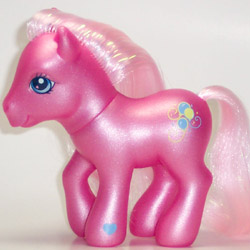
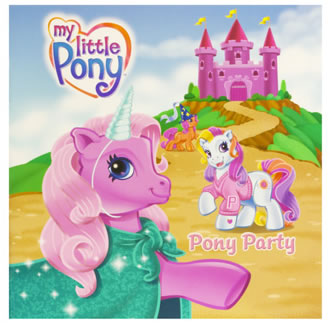
While in Seattle last month I stayed at the Marriott and stumbled on one of the most interesting conventions I've seen for a long time.  We knew something was up when we entered an elevator with a twenty-something man with a "My Little Pony" shopping bag.  But, as he and my ten-year-old compared notes, it became clear that this isn't the same little pony at all.  That is, Pinkie Pie, hasn't been killed, off, and Rarity is still the jazziest pony this side of Unicornia.  But the new ponies no longer spend their days planning picnics and finding the perfect gift for each  birthday party. This is my daughter's favorite, Pinkie Pie  (c. 2006) and a My Little Pony storybook featuring her:


Suddenly, however, Rarity has been channeling her inner Bruce Lee and Pinky Pie seems to have revealed a diabolical side to her personality.  Indeed, a quick web search revealed that this is a recent transformation. Hasbro's My Little Pony franchise was changed from bottom up by Lauren Faust.  She helped change and develop the Powerpuff Girls, another gender-crossing TV show. Now she's helped "reboot" the equestrian series as "My Little Pony: Friendship is Magic."  Little wonder that it is now attracting an adult male, and occasionally female audience (which calls itself "bronies," as in "bro" + "pony").  The change is intriguing in design terms. This is the new Pinkie Pie:


Big eyes, big teeth, and fluffy sculpted hair. . . And a major course in assertiveness training ("we little ponies. . . are noooo pony pushovers").  . .

Wednesday, August 29, 2012

The Universal No in Arizona

Just back from our grand tour of Arizona, California, Washington, British Columbia and Alaska. While in Arizona, I began to notice all the "no gun signs." Most show a handgun crossed out.  Nice example of the "universal no" in action.


I began photographing them, but quickly learned that this was a sure fire way to strike up conversations with anyone nearby. I got tired of it and finally stopped after someone at a swimming pool pulled me aside.  Alas, the photo above isn't mine, but looks pretty typical.